

Jun
3,
2026
Vibe Coding: Vibe Mastery or Myth?
This article examines how culture, teams, and tools must evolve to deliver measurable ROI beyond faster prototyping. It explores the cultural pivot from siloed engineering to distributed innovation, the redesign of teams blending non-developers with governed AI agents, and the strategic balancing act of tool investment and governance. Drawing from...

May
19,
2026
Turn Vibe Code Into Enterprise Wins in Early Adoption Stages
Vibe coding promises dramatic speed gains by allowing teams to generate software through natural-language prompts, but many early adopters struggle to turn rapid prototypes into reliable, production-ready systems. This article explores the “Turmoil Sprint,” the chaotic early phase of AI-assisted development, and outlines practical strategies including planning frameworks, guardrails, security...

May
12,
2026
Exploring Google AI Studio
Google AI Studio offers developers a versatile, web-based environment for experimenting with Gemini models across image generation, audio, prompting workflows, code generation, and full-stack app prototyping. This article walks you through setting up API keys, using the Playground, generating code, and deploying AI-powered applications, highlighting both the platform’s capabilities and...

Apr
23,
2026
From Vibe Coding to Secure Engineering
AI-accelerated source code development is transforming the daily work of many developers. LLMs and coding agents can generate functions in seconds, but they also carry risks including hallucinated dependencies, slopsquatting, and insecure automation steps. This article shows how to systematically mitigate these risks using engineering principles, guardrails, and automated validations.

Apr
17,
2026
AI-Driven Software Development and the Limits of Decision-Making
In executive circles, there is a growing belief that software will soon be free. At the same time, tech gurus are declaring software engineering dead because humans are no longer needed. Both are wrong. When software is produced at the speed of light, entirely new questions arise about purpose and...
Apr
1,
2026
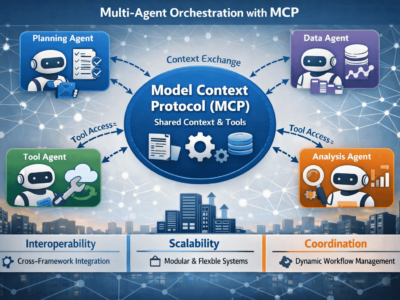
Can MCP Enable Truly Cooperative AI Agents?
Picture this: you give a single voice command and, minutes later, an OpenAI-powered writing agent drafts an event brochure, a Gemini spreadsheet agent reconciles supplier invoices, and a Claude negotiation agent emails final quotes. Each working from the same facts, updating the same timeline, and handing off sub-tasks automatically.
Mar
19,
2026
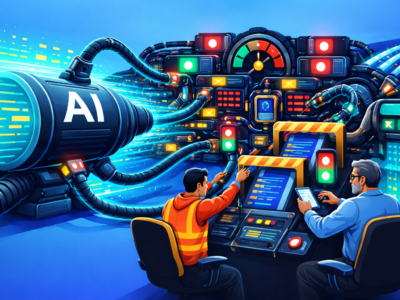
AI in Software Development: Speed Without Structure Will Break Your System
Generative AI accelerates software development – that is real and measurable. But most teams introduce AI at one point in the process and call it done. They speed up code generation. They ship prototypes in days. And then the overall system starts breaking in ways they didn't anticipate. The problem...
Mar
18,
2026
How developers Actually Use Vibe Coding
Vibe coding and AI coding tools are rapidly changing how software is built. Developers are experimenting with LLM-powered assistants such as Cursor, Claude Code, and Copilot to speed up coding, debugging, and prototyping. But where do these tools actually help and where do they create new risks? Experienced developers share...
Feb
23,
2026
AI in Enterprise Engineering: This Is Your Moment
Enterprise teams have run the experiments. Now comes the harder part to make AI really productive.
Feb
16,
2026
Vibe- or AI-assisted Coding
Together, we will analyze findings from four real-world development projects to shed light on the practical use and limitations of modern AI coding assistants. The “vibe coders” here—Cursor, Aider, Roo Code, JetBrains Pro AI Agent (Rider, WebStorm), GitHub Copilot (VSC), and Claude Code—promise deep contextual understanding even for extensive codebases.